Getting approved for financing often comes down to one question: do you meet the lender’s requirements before you apply? Knowing how to qualify for a business line of credit saves you time, protects your credit profile, and puts you in a stronger position to negotiate terms. A line of credit is one of the most flexible funding tools available, but lenders still look closely at your credit, revenue, time in business, and documentation before they approve you.
This guide breaks down exactly what lenders evaluate, how the approval process works, and the practical steps you can take to improve your chances. Whether you run a startup or an established company, you’ll leave with a clear picture of where you stand and what to do next.
What is a Business Line of Credit?
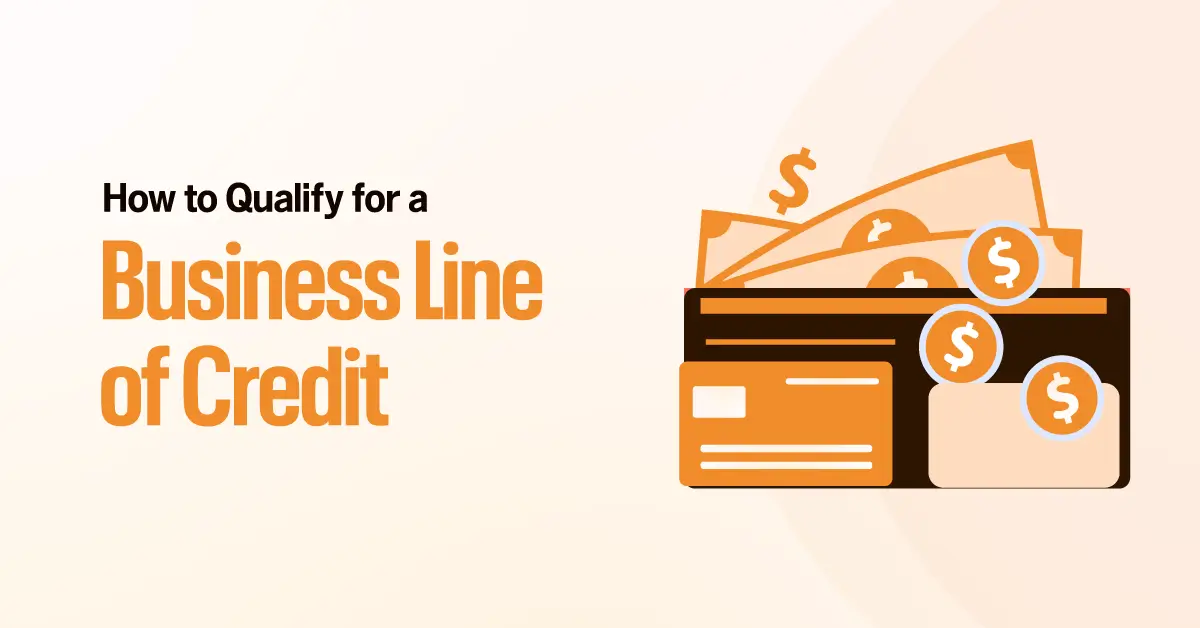
A Business Line of Credit is a revolving form of financing that gives you access to a set credit limit you can draw from as needed, repay, and borrow again. Unlike a term loan, which delivers a lump sum you repay on a fixed schedule, a line of credit lets you pull only the amount you need and pay interest solely on what you use.
This flexibility makes it ideal for managing cash flow gaps, covering unexpected expenses, buying inventory, or bridging the wait between invoicing and payment. Many owners use it as a financial safety net rather than a one-time funding event. If your revenue fluctuates seasonally or you frequently wait on customer payments, a line of credit can smooth out the peaks and valleys without locking you into a rigid repayment structure.
Lines of credit come in two main forms. A secured line is backed by collateral such as equipment, inventory, or receivables, while an unsecured line relies more heavily on your creditworthiness and business performance. Secured options often carry higher limits and lower rates, but they put assets at risk if you default.
Need Flexible Capital That Moves at the Speed of Your Business?
At Committed to Capital, we help business owners across New Jersey and nationwide secure lines of credit built around real cash flow, not rigid bank formulas. Our team explains your options in plain terms and matches you with financing that fits how your business actually operates. Explore your financing options or speak with a specialist to see what you qualify for.
How Does a Business Line of Credit Work?
A business line of credit works on a draw-and-repay cycle. Once approved, you receive a maximum credit limit. You can withdraw funds up to that limit whenever you need them, and you only pay interest on the outstanding balance. As you repay what you’ve borrowed, that amount becomes available again.
For example, if you have a $50,000 line and draw $15,000 to cover a payroll shortfall, you pay interest on the $15,000 only. Once you repay it, your full $50,000 becomes available again. This revolving structure is what separates a line of credit from a traditional loan and makes it especially useful for ongoing or unpredictable expenses.
Lenders typically charge interest at variable rates, and some add maintenance or draw fees. Repayment terms vary, so reviewing the full cost structure before you sign matters as much as the rate itself.
Why Qualifying Matters Before You Apply
Applying without understanding the requirements can hurt you. Most lenders run a hard credit inquiry when you apply, which can temporarily lower your credit score. Multiple rejections in a short window signal risk to future lenders and can make approval harder down the line.
Qualifying first means you apply strategically. You target lenders whose criteria match your profile, you prepare the right documentation, and you avoid wasting hard inquiries on applications you’re unlikely to win. Taking time to strengthen weak areas before applying often leads to better limits and lower rates.
Key Requirements to Qualify for a Business Line of Credit
Lenders weigh several factors together rather than relying on any single number. Here are the core requirements that determine whether you qualify.
Business and Personal Credit Scores
Your credit history is one of the first things lenders check. For newer businesses, lenders often lean on your personal credit score, frequently looking for a score in the mid-600s or higher for traditional financing. Established businesses with a strong business credit profile may qualify on business credit alone.
If your credit needs work, it’s worth strengthening before you apply. These proven ways to improve your business credit score before applying for capital can meaningfully raise your approval odds and unlock better terms.
Time in Business
Lenders want to see a track record. Traditional banks often require at least two years in operation, while online and alternative lenders may approve businesses with six months to a year of history. The longer you’ve operated profitably, the lower the perceived risk.
Annual Revenue and Cash Flow
Revenue proves you can repay what you borrow. Many lenders set minimum annual revenue thresholds, often ranging from $50,000 to $250,000 depending on the lender and credit limit. Beyond the top-line number, lenders examine your cash flow to confirm you generate enough consistent income to handle repayments. Healthy, predictable cash flow strengthens your application considerably.
Business Documentation and Legal Structure
Be ready to provide bank statements, tax returns, profit and loss statements, and proof of business registration. A clearly defined legal structure, such as an LLC or corporation, with separated business and personal finances, signals professionalism and makes underwriting smoother.
Collateral and Personal Guarantees
Secured lines require collateral, while unsecured lines often require a personal guarantee, meaning you’re personally responsible if the business can’t repay. Understanding which option a lender offers, and what you’re putting at risk, helps you choose the right product.
How to Improve Your Chances of Approval
If you don’t fully meet a lender’s criteria today, several practical steps can strengthen your position:
- Build your business credit by opening trade lines, paying vendors early, and keeping balances low relative to limits.
- Separate business and personal finances with a dedicated business bank account and clean bookkeeping.
- Maintain strong, consistent cash flow and avoid frequent overdrafts in the months before applying.
- Reduce existing debt to improve your debt-to-income and debt-service ratios.
- Organize your documentation so you can respond quickly to underwriting requests.
- Match the lender to your profile instead of applying everywhere at once.
Even a few months of focused preparation can move you from a borderline applicant to an approval with favorable terms.
Business Line of Credit vs. Other Financing Options: A Side-by-Side Comparison
Choosing the right financing tool starts with understanding how a business line of credit stacks up against other common options. The table below compares key features so you can match the product to your specific cash flow needs, repayment preferences, and qualification profile.
| Feature | Business Line of Credit | Term Loan | Revenue-Based Financing | Invoice Factoring |
| How it works | Revolving credit you draw, repay, and reuse up to a set limit | Lump sum repaid on a fixed schedule | Funding repaid as a percentage of monthly sales | Sell unpaid invoices for immediate cash |
| Best for | Cash flow gaps, recurring or unpredictable expenses | One-time large purchases or expansion | Businesses with strong, fluctuating revenue | Companies waiting on customer payments |
| Interest / cost | Pay interest only on what you draw | Fixed interest on full amount | Flat fee tied to sales, no fixed rate | Factoring fee per invoice |
| Repayment structure | Flexible, repay and re-borrow | Fixed monthly payments | Variable, scales with revenue | Repaid when customer pays the invoice |
| Typical qualification | Mid-600s credit, 6+ months in business, steady revenue | Stronger credit and longer track record | Consistent sales history over collateral | Creditworthy customers more than your own credit |
| Funding speed | Fast once approved; instant draws | Moderate to slow | Fast | Fast |
| Collateral | Secured or unsecured options | Often required for larger amounts | Usually none | Invoices serve as the asset |
| Main advantage | Flexibility and reusable access to funds | Predictable payments for big investments | Repayment flexes with your income | Unlocks cash tied up in receivables |
| Main drawback | Variable rates and possible maintenance fees | Less flexible; interest on full balance | Can be costlier during high-sales months | Fees reduce total invoice value |
A line of credit wins on flexibility, making it the strongest fit for ongoing or seasonal cash flow management. If you need a fixed amount for a defined project, a term loan may suit you better. For businesses with strong sales but limited collateral, revenue-based financing ties repayment directly to performance, while invoice factoring helps when slow-paying customers are the real bottleneck. Matching the tool to your situation is what protects your margins and keeps repayment manageable.
Common Mistakes That Hurt Your Application
Avoiding these frequent missteps can be the difference between approval and rejection:
- Applying to multiple lenders at once and triggering several hard inquiries
- Mixing personal and business finances, which makes cash flow hard to verify
- Submitting incomplete or inconsistent financial documents
- Ignoring your business credit profile until the moment you need funding
- Overstating revenue or projections that financial records don’t support
- Choosing the wrong product, such as applying for an unsecured line when your profile suits a secured one
How to Choose the Right Lender
Not all lenders evaluate applications the same way. Traditional banks offer the lowest rates but have the strictest requirements and slowest timelines. Online and alternative lenders move faster and approve a wider range of profiles, though often at higher cost. Credit unions can fall in between, with competitive rates for members.
When comparing lenders, weigh these decision factors:
- Minimum credit score, revenue, and time-in-business requirements
- Interest rates, fees, and the full cost of borrowing
- Funding speed and how quickly you can access draws
- Whether the line is secured or unsecured
- Quality of support and transparency around terms
Economic conditions also shape what you’ll pay. Understanding how inflation and interest rates affect small business loans helps you time your application and set realistic expectations. And as lending technology evolves, it’s worth knowing how AI is changing small business loan underwriting, since faster, data-driven approvals are becoming the norm.
If a line of credit isn’t the perfect fit, explore alternatives. Revenue-based financing ties repayment to your sales, while invoice factoring turns unpaid invoices into immediate cash. Each solves a different cash flow challenge, so matching the tool to your needs matters.
Ready to See What You Qualify For?
You don’t have to navigate the approval process alone. Committed to Capital delivers fast, flexible business financing with clear terms and honest guidance, so you know exactly where you stand before you apply.
Our specialists review your goals, explain your real options, and help you secure the right line of credit for your business. Request a quote and find the funding that fits.
Conclusion
Learning how to qualify for a business line of credit puts you in control of the financing process. Lenders look at your credit scores, time in business, revenue, cash flow, documentation, and collateral, and they weigh these factors together. By strengthening weak areas, organizing your paperwork, and matching yourself to the right lender, you significantly improve your odds of approval and better terms.
The smartest next step is to assess your current profile against the requirements above, fix what you can, and apply strategically rather than broadly. If you want guidance tailored to your situation, working with a financing partner who understands your business can save you time and help you compare options with confidence.
For businesses weighing larger or longer-term needs, it’s also worth reviewing how working capital can be used to expand operations before committing to any single solution.