Small to medium-sized businesses in New Jersey often need financing for working capital, equipment, inventory, expansion, hiring, renovations, or unexpected expenses. Traditional bank financing may work well for businesses that meet conventional underwriting requirements and have time for a more documentation-heavy process. When speed, flexibility, or alternative underwriting matters, non-bank financing may provide another path.
Non-bank lenders and financing providers evaluate businesses differently. Depending on the product, they may consider revenue, cash flow, time in business, bank activity, credit history, receivables, equipment, or other business assets. This can make them useful for established companies that need financing but do not fit neatly into a conventional bank loan.
For New Jersey businesses, the market includes direct online lenders, SBA-focused lenders, local financing companies, marketplaces, and funding partners. This guide compares the 10 providers already included in our list and explains where each may fit.
The goal is not simply to identify the fastest provider. It is to help you understand which type of non-bank financing makes sense for your business, what to compare before accepting an offer, and where local New Jersey businesses can start their search.
Key Takeaways
- Non-bank lenders give New Jersey small businesses an alternative to traditional bank financing, often with streamlined applications and underwriting based on business performance.
- The right financing option depends on why you need capital, how quickly you need it, your cash flow, repayment capacity, credit profile, and preferred payment structure.
- Non-bank financing can include term loans, business lines of credit, equipment financing, revenue-based financing, invoice factoring, SBA loans, and other commercial funding products.
- Not every company on this list operates the same way. Some lend directly, while others work as financing platforms, marketplaces, or funding partners that connect businesses with multiple programs.
- Committed to Capital is based in Pitman, New Jersey and helps businesses compare multiple financing options rather than relying on a single product.
- Before accepting any business financing, compare the total repayment amount, payment frequency, fees, prepayment terms, collateral or guarantee requirements, and the cost of capital.
- Fast funding can be useful, but speed should not be the only factor in choosing a non-bank lender.
What Are Nonbank Lenders
A non-bank lender provides business financing without operating as a traditional deposit-taking bank. Depending on the company and financing product, funding may come directly from the provider, through a partner financial institution, or through a network of lenders.
This distinction is important because the term “non-bank lender” is often used broadly. The companies businesses encounter may include:
- Direct lenders that underwrite and provide financing.
- Financing platforms that provide or service certain products while working with partner institutions for others.
- Marketplaces and brokers that help businesses compare offers from multiple financing sources.
- SBA-focused and mission-based lenders that provide longer-term programs to qualifying businesses.
Non-bank commercial lenders commonly evaluate factors such as business revenue, cash flow, time in operation, credit history, bank activity, receivables, and business assets. Requirements vary significantly by provider and product.
They may also offer applications and underwriting processes designed specifically for small and mid-sized businesses.
Common uses for non-bank business financing include:
- Working capital
- Inventory purchases
- Equipment
- Payroll
- Renovations
- Marketing
- Expansion
- Seasonal expenses
- Contract fulfillment
- Cash-flow gaps
For New Jersey businesses, the advantage is choice. A restaurant in Cape May, contractor in South Jersey, manufacturer in Trenton, retailer in Newark, and professional-services firm in Jersey City may all need capital for different reasons and require different financing structures.
The best approach is to match the financing structure to the business need rather than choosing a provider based only on advertised speed or maximum funding.
Ready to Fund Your Next Move? Partner With Committed to Capital Today
At Committed to Capital, we help New Jersey businesses evaluate financing options based on what they are trying to accomplish, how their business generates revenue, and how the repayment structure may affect cash flow.
Whether you are purchasing equipment, covering a seasonal gap, expanding your location, managing working capital, or planning a larger investment, our team can help you understand the available options and compare the structure of each program.
Instead of focusing on a single type of financing, we work across multiple business funding categories so you can evaluate which option fits your goal.
Start your funding request with Committed to Capital to discuss financing for your New Jersey business.
Top 10 Nonbank Lenders for Small Businesses in New Jersey
The following list includes the same 10 non-bank lenders and financing providers selected for this guide. They represent different parts of the commercial financing market, including direct lenders, lending platforms, marketplaces, local funding companies, and SBA-focused lenders.
This should be treated as a comparison list rather than an objective ranking. The right provider depends on your financing purpose, qualifications, timeline, preferred repayment structure, and total cost.
1. Committed to Capital
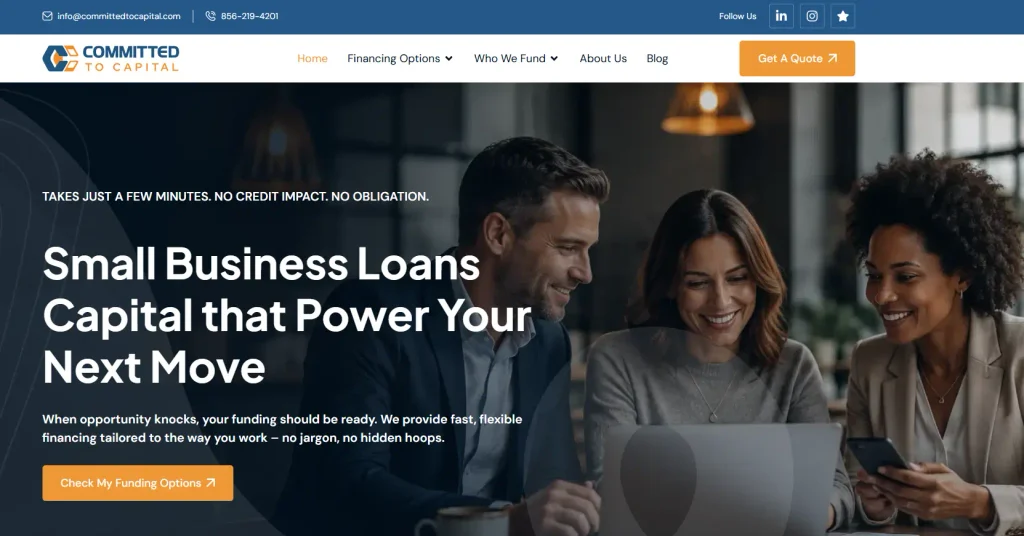
Committed to Capital is a business financing company based in Pitman, New Jersey that works with small and mid-sized businesses across the state.
Rather than limiting business owners to one financing product, Committed to Capital helps evaluate multiple options, including working capital, term loans, business lines of credit, equipment financing, revenue-based financing, invoice factoring, SBA financing, commercial mortgages, and startup funding.
The local approach can be particularly useful for business owners who want to discuss their financing needs with a funding professional rather than selecting a product based entirely on an automated application.
For New Jersey businesses, the main advantage is the ability to compare different financing structures through a local funding partner familiar with businesses in South Jersey and throughout the state.
May fit businesses that: want personalized guidance and access to multiple business financing options rather than applying to one lender or product at a time.
2. OnDeck
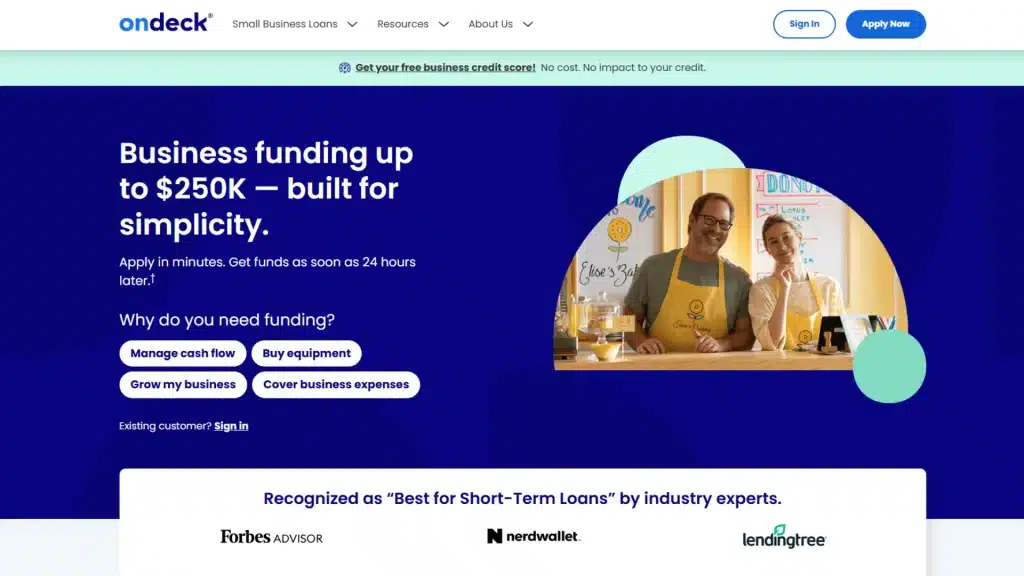
OnDeck is an online business lender offering term loans and business lines of credit.
Its term loan provides a lump sum that can be used for a defined business expense, while its line of credit provides revolving access to capital for ongoing needs.
That distinction makes OnDeck relevant for businesses deciding between financing a one-time investment and maintaining flexible access to working capital.
Applications and underwriting are handled digitally, although qualification and final terms depend on the business and financing product.
May fit businesses that: are established, want an online financing process, and need either a term loan for a specific expense or revolving credit for ongoing working-capital needs.
3. BlueVine
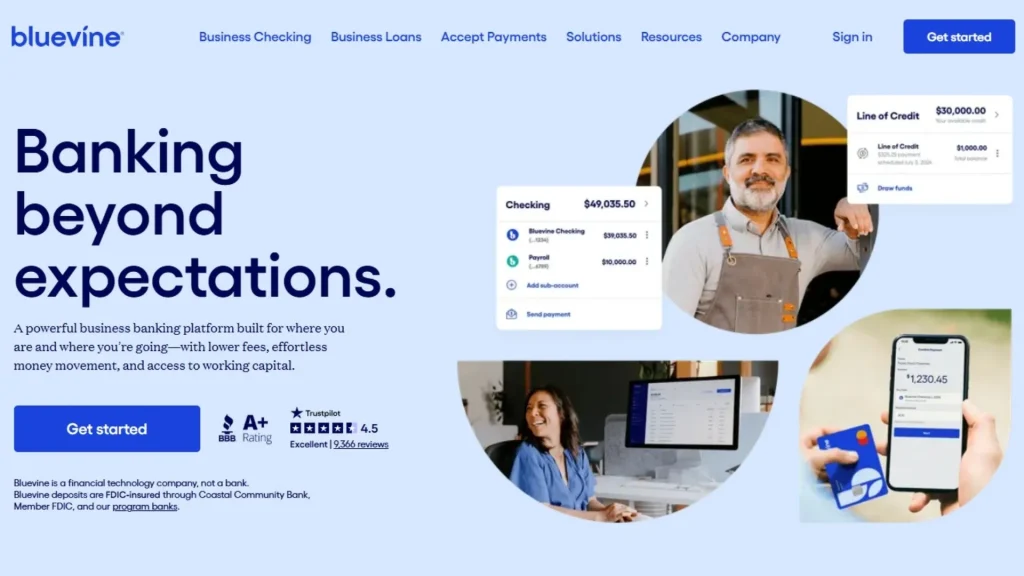
BlueVine is a financial technology platform offering business banking and financing services, including a revolving business line of credit.
A line of credit differs from a traditional term loan because a business can draw available funds when needed rather than receiving the entire amount upfront. As eligible balances are repaid, credit generally becomes available to use again according to the product terms.
This can make revolving financing useful for recurring expenses such as inventory, short-term cash-flow gaps, seasonal purchases, or operating costs.
Businesses should review the specific lender, eligibility requirements, repayment schedule, fees, and terms associated with any Bluevine financing offer before accepting it.
May fit businesses that: want digital financial tools and revolving access to working capital rather than a single lump-sum loan.
4. Advancepoint Capital
AdvancePoint Capital is a business funding marketplace that provides access to multiple commercial financing products through its network.
Available categories include business loans, lines of credit, SBA financing, equipment financing, invoice factoring, purchase-order financing, accounts-receivable financing, and other alternative funding structures.
Because AdvancePoint works across several financing categories, its value is primarily in helping businesses evaluate more than one possible funding path.
This can be useful when an owner is not sure whether a line of credit, term loan, equipment financing, SBA loan, or another structure best matches the business need.
May fit businesses that: want to compare several financing categories through one funding marketplace.
5. Sunrise Funding Group

Sunrise Funding Group provides business funding options for companies seeking working capital and other forms of commercial financing.
Its available solutions include working capital, business lines of credit, equipment financing, and growth-focused funding.
For New Jersey businesses, Sunrise may be worth considering when the primary objective is covering operating expenses, purchasing equipment, managing short-term cash flow, or funding a growth initiative.
As with any financing provider, businesses should determine whether an offer comes directly from the company or through another funding source and review the full repayment terms before proceeding.
May fit businesses that: need flexible working capital or financing for equipment and business growth.
6. Pursuit Lending
Pursuit is a community-focused lender serving businesses in New Jersey and several other states.
Its financing programs include SBA 7(a), SBA 504, SBA Microloans, and other small-business loan programs. These types of financing generally involve more documentation and underwriting than short-term online funding but can be better suited to planned, longer-term investments.
Potential uses include working capital, equipment and technology, business acquisition, construction or improvements, owner-occupied commercial real estate, inventory, and refinancing eligible business debt.
For business owners evaluating SBA financing, Pursuit provides an alternative to applying through a traditional large bank.
May fit businesses that: have time for a more detailed underwriting process and are seeking longer-term financing for expansion, equipment, real estate, acquisition, or other significant investments.
7. Rapid Finance
Rapid Finance provides and arranges several types of commercial financing.
Its financing categories include small business loans, business lines of credit, merchant cash advances, bridge financing, SBA financing, invoice factoring, asset-based financing, and commercial real estate financing.
Because the available structures vary considerably, business owners should focus on which product they are being offered rather than treating all Rapid Finance options as interchangeable.
A fixed-payment business loan, revolving line of credit, and sales-based financing product can have very different costs, repayment schedules, and effects on cash flow.
May fit businesses that: want access to several short- and longer-term financing structures through one provider and its financing network.
8. National Funding

National Funding focuses primarily on business loans and equipment financing for small businesses.
Business funding may be used for needs such as payroll, inventory, working capital, short-term opportunities, and other operating expenses. Equipment financing is designed specifically for acquiring or upgrading business equipment.
Separating equipment purchases from general working-capital needs can help a business choose a financing structure that better matches the useful life and purpose of the expense.
May fit businesses that: need working capital or financing specifically tied to purchasing or replacing business equipment.
9. Funderfind

FunderFind is a New Jersey business financing service that works with financing partners to help companies find funding.
Its listed financing categories include term loans, business lines of credit, working-capital loans, equipment financing, SBA loans, merchant cash advances, small-business loans, and asset-based financing.
Because FunderFind works across several funding types, businesses can use the process to evaluate more than one financing route rather than assuming a traditional loan is automatically the right answer.
Businesses should still compare the provider behind each offer, financing cost, repayment frequency, term, fees, and any collateral or personal-guarantee requirements.
May fit businesses that: prefer working with a funding service that can explore multiple financing sources and products.
10. Fora Financial

Fora Financial provides business financing to small and mid-sized companies, including businesses operating in New Jersey.
Its financing is designed primarily for business expenses such as working capital, inventory, renovations, marketing, staffing, and other growth or operating needs.
Fora focuses on an online application process and alternative business underwriting rather than a traditional branch-based bank experience.
As with other non-bank financing, actual qualification, pricing, repayment structure, and funding timing depend on the applicant and the offer.
May fit businesses that: need flexible business funding for operational expenses or near-term growth initiatives and prefer an online process.
Funding Options in New Jersey at a Glance
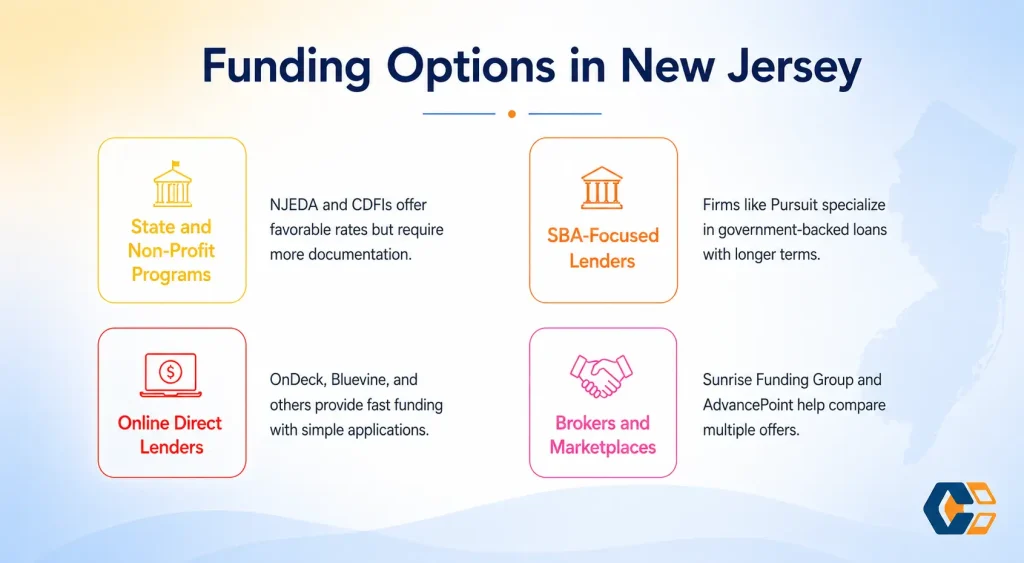
Committed to Capital helps New Jersey businesses compare financing across several categories. Understanding these categories before applying can make it easier to identify the right starting point.
- State and nonprofit programs – Organizations such as the New Jersey Economic Development Authority (NJEDA) and Community Development Financial Institutions may provide loans, guarantees, technical assistance, or specialized programs for eligible businesses. These programs can be worth exploring when cost and longer-term business development matter more than funding speed.
- SBA-focused lenders – SBA lenders such as Pursuit provide government-backed loan programs for qualifying businesses. SBA financing may be appropriate for acquisitions, equipment, working capital, owner-occupied real estate, and larger expansion projects. Documentation and underwriting are generally more involved than with short-term online financing.
- Online direct lenders – Providers such as OnDeck, Bluevine, Rapid Finance, National Funding, and Fora Financial use online applications and technology-enabled underwriting for various commercial financing products. Product availability, requirements, cost, and funding time vary by company.
- Brokers, funding partners, and marketplaces – Providers such as Committed to Capital, AdvancePoint, Sunrise Funding Group, and FunderFind can help businesses evaluate multiple financing routes. Before proceeding, determine who is providing the financing, what role the intermediary plays, and whether any fees apply.
Common non-bank financing products include term loans, business lines of credit, equipment financing, revenue-based financing, invoice factoring, SBA loans, asset-based financing, and other forms of working capital.
The correct choice depends on the purpose of the capital.
For example, a Jersey City professional-services company with recurring short-term cash-flow gaps may benefit from revolving credit, while a New Jersey manufacturer buying machinery may be better served by equipment financing or a longer-term loan.
Likewise, a company planning a major acquisition has a very different financing need from a retailer purchasing additional seasonal inventory.
Start with the business objective. Then compare products and providers.
That approach is more useful than choosing whichever company advertises the fastest approval.
Businesses that need help comparing these structures can review Committed to Capital’s non-bank financing solutions.s its value by steering you toward the right non-bank financing solutions rather than the most convenient one.
Restaurant, Retail, and Seasonal Working Capital Along the Jersey Shore
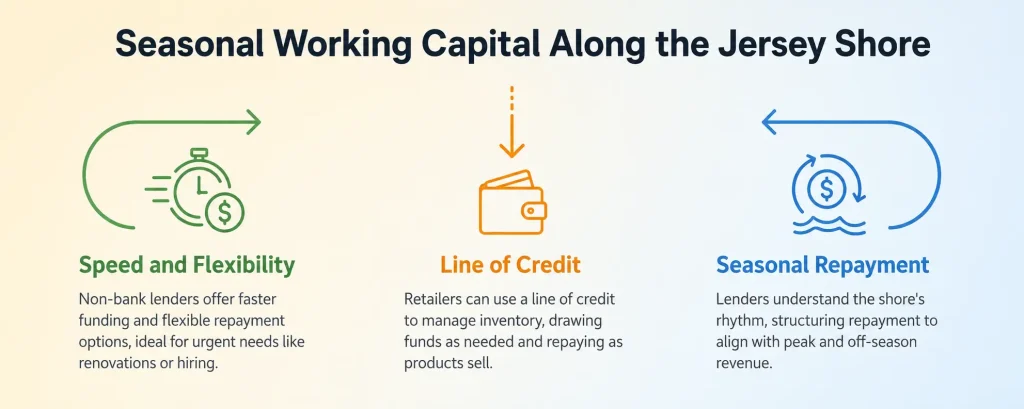
Restaurants, retailers, hospitality businesses, and seasonal operators along the Jersey Shore often experience significant differences between peak-season and off-season cash flow.
Financing for these businesses should therefore be evaluated based on when revenue arrives, what the capital will be used for, and how the repayment schedule affects cash available for operations.
- Match the financing product to the expense.
A restaurant renovating outdoor seating before the summer season has a different need from a retailer purchasing inventory or a hotel replacing equipment.
A term loan may make sense for a defined one-time project. Equipment financing may better match a specific asset purchase. A business line of credit can provide reusable capital for recurring seasonal needs.
Revenue-based financing may also be considered when the repayment structure is tied to business revenue, although businesses should carefully review how payments are calculated and the total financing cost. - Evaluate repayment against seasonal cash flow.
A Point Pleasant retailer, Wildwood hospitality business, or Cape May restaurant may generate a disproportionate share of annual revenue during its busiest months.
Before taking financing, owners should model payments during both peak and slower periods. A product that is manageable during July may put significantly more pressure on cash flow during January.
Committed to Capital can help seasonal businesses compare financing structures based on their operating cycle rather than looking only at the amount available. - Consider a line of credit for recurring inventory needs.
Seasonal retailers often purchase inventory before receiving revenue from the products being stocked.
A business line of credit can be useful in this situation because the business draws capital as needed rather than taking an entire lump sum upfront.
The business should still compare draw fees, interest or financing charges, repayment requirements, and renewal conditions before selecting a line.
For Jersey Shore businesses, the important question is not simply, “How quickly can I get funded?”
It is, “Will the financing still make sense when my seasonal revenue changes?”
Why New Jersey Businesses Choose Non-Bank Lenders
New Jersey businesses often consider non-bank lenders when they want a more streamlined financing process, different underwriting criteria, or access to financing products that may not fit a conventional bank loan.
1. Faster and more streamlined applications
Many non-bank providers use online applications, digital document submission, and technology-enabled underwriting. This can make the application and review process more streamlined than traditional bank financing.
Actual approval and funding times still vary by lender, financing product, documentation, and the applicant’s financial profile, so speed should be evaluated alongside cost and repayment terms.
2. Different underwriting criteria
Traditional banks may place significant weight on credit history, collateral, financial statements, and established operating history.
Non-bank lenders may also consider those factors, but some place additional emphasis on business revenue, cash flow, bank activity, receivables, equipment, or other indicators of business performance.
This does not mean approval is guaranteed or that credit is unimportant. It means underwriting criteria can differ from one financing provider and product to another.
3. More financing product options
Non-bank financing covers more than one type of business loan. Depending on the provider, New Jersey businesses may be able to evaluate:
- Term loans
- Business lines of credit
- Equipment financing
- Invoice factoring
- Revenue-based financing
- Asset-based financing
- SBA financing
- Commercial real estate financing
Each product serves a different purpose.
A seasonal retailer may benefit from revolving working capital, while a manufacturer purchasing machinery may need equipment financing. A B2B company with unpaid invoices may evaluate factoring, while a business planning a major expansion or property purchase may consider SBA or commercial real estate financing.
4. Digital application processes
Many non-bank lenders and financing platforms allow business owners to apply, submit documents, communicate with the provider, and review financing offers online.
For owners managing day-to-day operations, a digital process can make financing easier to explore without repeated branch visits or lengthy paper-based applications.
Businesses should still review the financing agreement carefully and confirm who is providing the capital, how repayment works, what fees apply, and what the total financing obligation will be.
5. When a traditional bank or SBA loan may still be better
Non-bank financing is not automatically the best option for every New Jersey business.
A traditional bank loan may be worth considering when a business has strong qualifications, does not need capital immediately, and can complete a more detailed underwriting process.
SBA financing can also be appropriate for eligible businesses seeking longer-term funding for expansion, acquisitions, equipment, working capital, or owner-occupied commercial real estate.
The right choice depends on the purpose of the financing, how quickly the capital is needed, the total cost, repayment structure, and the business’s ability to manage the obligation.
For New Jersey businesses, the real advantage of non-bank financing is having more ways to match financing to a specific business need rather than relying on one lending model.
How to Choose the Right Non-Bank Lender in NJ
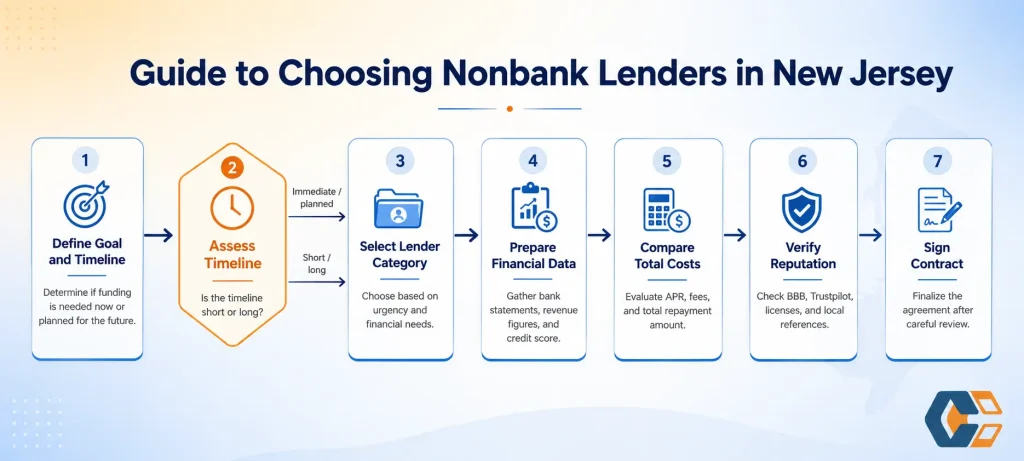
Choosing among non-bank lenders for small business in New Jersey is easier when you compare providers in a consistent way.
Step 1: Define exactly why you need the capital.
Start with the use of funds.
Are you purchasing equipment, filling an inventory order, covering payroll, opening another location, renovating a restaurant, acquiring a business, or managing a temporary cash-flow gap?
A clear purpose makes it easier to eliminate financing products that do not fit.
Step 2: Review your financial position before applying.
Eligibility requirements vary by lender and financing product.
Before applying, gather the documents most likely to be requested, such as:
- Business bank statements
- Recent financial statements
- Business tax returns when applicable
- Current debt information
- Ownership information
- Identification
- Details about the intended use of funds
Also review your business revenue, cash flow, existing obligations, and personal and business credit.
Do not assume there is one universal minimum credit score, revenue requirement, or time-in-business rule for all non-bank lenders.
Step 3: Choose the appropriate financing category.
If you are planning a long-term expansion and have time for detailed underwriting, SBA financing may be worth exploring.
If you have recurring working-capital needs, a line of credit may be more appropriate.
If you are buying machinery, vehicles, or other business assets, compare equipment financing.
If unpaid B2B invoices are creating a cash-flow gap, invoice factoring may solve a more specific problem than a general-purpose loan.
If you want to evaluate several providers, consider working with a marketplace or funding partner.
Step 4: Compare total cost, not just the payment amount.
Ask what the financing will cost from beginning to end.
Review:
- Amount received by the business
- Total repayment amount
- Interest rate or financing charge
- APR when applicable and provided
- Origination or closing fees
- Broker or intermediary fees
- Payment frequency
- Repayment term
- Prepayment terms
- Personal guarantees
- Collateral or liens
- Late-payment or returned-payment fees
- Renewal or refinancing conditions
Be especially careful when comparing a factor rate with an interest rate or APR. They are not the same measurement.
Step 5: Verify who you are dealing with.
Before signing, identify whether the company is the lender, a broker, a marketplace, or another type of financing provider.
Review the company’s legal business information, contact details, disclosures, customer feedback, and the financing contract itself.
Be cautious if a provider:
- Will not clearly explain the total repayment amount.
- Cannot explain who is actually providing the financing.
- Pressures you to sign before reviewing the agreement.
- Gives vague answers about fees.
- Encourages you to take more financing than the business needs.
- Cannot clearly explain the payment schedule or prepayment terms.
A reputable financing process should give you enough information to understand the obligation before you accept it.
Why Small and Mid-Sized Businesses Choose Committed to Capital
Located in Pitman, New Jersey, Committed to Capital helps small and mid-sized businesses evaluate financing based on their specific use of funds, operating profile, and financial goals.
Instead of focusing on only one product, businesses can explore several funding options, including working capital, business term loans, lines of credit, revenue-based financing, equipment financing, invoice factoring, SBA 7(a) and 504 loans, commercial mortgages, and startup funding.
This multi-product approach is useful because the financing that works for one business may be a poor fit for another.
Why New Jersey Businesses Choose Us:
- Local New Jersey Guidance: Work with a funding professional who understands businesses across South Jersey and the broader New Jersey market.
- Multiple Financing Options: Compare financing structures for working capital, equipment, growth, real estate, receivables, and other business needs.
- Personalized Process: Discuss your funding objective with a real person instead of choosing a product solely from an automated menu.
The objective is to find a financing structure that fits the business need, not simply the largest amount available.
What Sets Committed to Capital Apart
Committed to Capital combines local New Jersey knowledge with access to multiple categories of business financing.
Being based in Pitman means we work in the same regional economy as many of the businesses we help.
Financing needs vary significantly across New Jersey.
A logistics company near Port Newark may need working capital to handle a new contract. A restaurant in Hoboken may be financing renovations or equipment. A South Jersey contractor may need vehicles or machinery. A retailer at the Jersey Shore may need inventory before its peak season.
Those businesses should not automatically receive the same financing recommendation.
Our approach starts by understanding the purpose of the capital, the business’s financial position, and the type of repayment structure that makes sense.
That gives owners a clearer way to compare available options befoe making a financing decision.
Types of Funding We Offer
Committed to Capital provides access to a range of non-bank financing solutions for New Jersey businesses.
| Funding Type | Best For | How It Works |
| Equipment Financing | Vehicles, machinery, technology, and specialized equipment | Helps finance business equipment while preserving cash for other operating needs |
| Term Loans | Planned investments, inventory, renovations, expansion, and working capital | Provides a lump sum that is repaid according to an agreed schedule |
| Business Line of Credit | Seasonal gaps, recurring expenses, inventory, and short-term needs | Provides revolving access to capital that can generally be drawn as needed up to the available limit |
| Revenue-Based Financing | Businesses with consistent or fluctuating revenue | Provides capital using a repayment or remittance structure connected to business revenue, depending on the program |
| SBA 7(a) and 504 Loans | Expansion, equipment, acquisitions, qualifying working capital, and commercial real estate | Government-backed financing for eligible businesses, generally involving more detailed underwriting and documentation |
| Invoice Factoring | B2B businesses waiting for customers to pay invoices | Converts qualifying accounts receivable into earlier access to working capital |
| Start-Up Funding | Newer businesses evaluating available financing | Provides potential funding routes for businesses that may not yet have a long operating history; eligibility varies significantly by program |
| Commercial Mortgages | Purchasing or refinancing business property | Financing designed specifically for eligible commercial real estate transactions |
The right product should reflect the purpose of the capital, expected return on the investment, repayment capacity, and cash-flow cycle of the business.
Get the Capital Your New Jersey Business Needs, Without the Wait
Finding business financing should start with understanding your options.
Committed to Capital works with New Jersey businesses seeking working capital, term loans, business lines of credit, revenue-based financing, equipment financing, SBA programs, invoice factoring, commercial real estate financing, and other commercial funding solutions.
Instead of assuming one product is right for every business, we look at why you need capital and which financing structure may fit that purpose.
Whether you operate in North Jersey, Central Jersey, South Jersey, or along the Jersey Shore, our team can help you compare available financing options.
Contact Committed to Capital to discuss your business needs or explore our funding options.